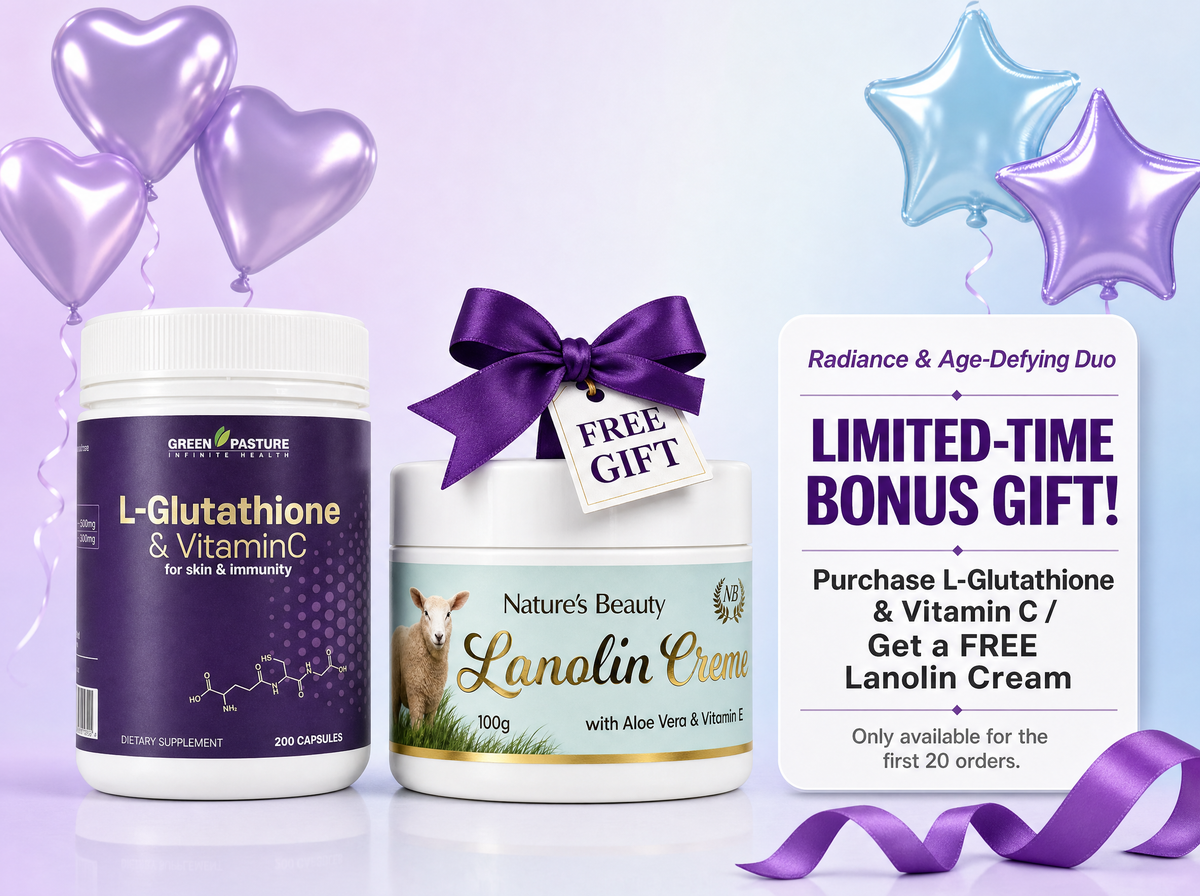
Glutathione has been circulating in skincare conversations for years — first in dermatology clinics, then in wellness communities, and now firmly in supplement aisles. Before you write it off as another trend or buy into every claim, here's what the research actually says, who it's genuinely for, and what to look for in a formula.

What Is Glutathione, Exactly?
Glutathione is a tripeptide your body produces naturally — built from three amino acids (glutamine, cysteine, and glycine) — and it functions as your cells' primary antioxidant defence. It has been studied in clinical settings since the 1980s, originally for liver function and chemotherapy support, before researchers began examining its effects on skin pigmentation.
The catch: glutathione production declines with age, UV exposure, and chronic stress. By your thirties, you're working with less of it than you were at twenty. That's the gap a well-formulated supplement is designed to address.
How Does Glutathione Work on Skin?
Glutathione influences skin tone through two mechanisms: it inhibits tyrosinase (the enzyme that drives melanin production) and it shifts melanin synthesis away from darker eumelanin toward lighter phaeomelanin. Both pathways contribute to a more even complexion over time — not overnight.
The second mechanism is where Vitamin C becomes important. Vitamin C (ascorbic acid) regenerates oxidised glutathione back into its active form, extending its working life in the body. A glutathione supplement without Vitamin C is doing half the job — which is why formulations like Green Pasture's L-Glutathione + Vitamin C pair both in a single capsule.
What it actually does
Four things glutathione is genuinely good for
What Do the Studies Actually Show?
The evidence is promising — not definitive, but substantive enough to take seriously. Here's what the peer-reviewed literature shows:
The clearest trial to date: Arjinpathana & Asawanonda (2010, PMC7196133) ran a double-blind, placebo-controlled study over four weeks. Participants taking oral glutathione showed statistically significant reductions in melanin index on multiple body sites — sun-exposed and non-exposed — compared to placebo. The effect was modest but measurable.
A 2025 systematic review: Sarkar et al. reviewed the published evidence across multiple trial designs. The review found consistent signals for melanin reduction and improved skin luminosity, but noted most trials are short (4–12 weeks) with relatively small cohorts. Conclusion: a reasonable safety and efficacy profile, with calls for longer-duration trials.
The honest caveat: Sitohang et al. (2020) raised a methodological point — many trials measure melanin index (a device reading) rather than independent dermatologist assessment. Results vary with skin type, baseline pigmentation, and sun exposure during the trial. Consistent use over 8–12 weeks alongside sunscreen is the most evidence-aligned approach.
Who Is Oral Glutathione Actually For?
People in their thirties and forties dealing with sun-exposure pigmentation tend to see the most noticeable results — melasma, post-inflammatory marks, or general uneven tone built up over years of UV exposure. It works gradually and cumulatively, not as a corrective intervention.
It's not a substitute for sunscreen. It works best as a complement: protect from new UV damage, let the glutathione help your cells manage existing oxidative stress and pigmentation signals. If you want a steady, systemic approach with a real evidence base, it's worth a proper run.
Is Oral Glutathione Safe?
Oral glutathione at standard supplement doses has a strong safety profile. The key distinction is oral versus intravenous (IV): IV administration — used in some Southeast Asian cosmetic clinics — carries real risks at high doses. Oral supplementation operates at entirely different concentration levels and has not produced those adverse effects in clinical trials.
Published trials have used oral doses from 250 mg to 1,000 mg per day over 4–24 weeks without significant adverse events. The most common reported effect: mild gastrointestinal sensitivity in a small subset of participants, particularly on an empty stomach. If you're pregnant, breastfeeding, or on immunosuppressants, check with your GP first.
Is It Worth Trying?
Yes — with the right expectations and the right formula. The evidence supports a consistent, multi-week trial for anyone dealing with oxidative dullness or sun pigmentation in their thirties or forties. What to look for: reduced L-glutathione (the bioactive form), Vitamin C built into the same formula, and a meaningful dose — not a sampler.
Green Pasture L-Glutathione + Vitamin C (200 capsules, $110 NZD) does exactly that. Each capsule delivers reduced L-glutathione alongside Vitamin C — the regeneration loop built in from the start, no need to manage two separate supplements. At 200 capsules, it's a full 8–12 week trial at a meaningful daily dose.

Frequently Asked Questions
Does oral glutathione actually work for skin brightening?
Yes, with caveats. Clinical trials — including a double-blind study by Arjinpathana & Asawanonda (2010, PMC7196133) — show measurable reductions in melanin index after consistent oral use over four weeks. Results are gradual and depend on dose, formula quality, and sun exposure habits. It is not a whitening agent and doesn't produce overnight results.
Why is glutathione always combined with Vitamin C?
Vitamin C (ascorbic acid) regenerates oxidised glutathione back into its active reduced form, extending its effectiveness in the body. Without Vitamin C, glutathione is consumed faster and doesn't sustain its antioxidant activity as long. Pairing them in a single supplement ensures the regeneration cycle is maintained.
How long does it take to see results from glutathione supplements?
Most clinical trials observe measurable changes at the 4–8 week mark, with more consistent results at 12 weeks of daily use. Individual results vary depending on baseline melanin levels, sun protection habits, and dose. Treating it as an 8–12 week commitment gives the most representative trial window.
Is glutathione safe to take daily in NZ?
Oral glutathione supplements at standard doses (250–1,000 mg/day) have a strong safety profile in published clinical trials. The safety concerns associated with IV glutathione — used in high-dose cosmetic clinics — do not apply to oral supplementation. As with any supplement, consult your GP if you are pregnant, breastfeeding, or on prescription medications.
There's more to glutathione than the marketing covers — and more than the skeptical takes give it credit for. The honest picture is genuinely encouraging.
This article is for general information only and is not medical advice. Always read the label and consult a healthcare professional before starting any new supplement, particularly if pregnant, breastfeeding, or taking medication.